
Leak Detection in Cross Roads.
Water you cannot see still leaves a trail: a jump in the bill, a meter that turns with everything off, a warm patch of floor, a soft spot in the yard. Leak detection follows that trail back to one point, so the only thing opened is the place where the pipe actually failed.
Finding the water before anything gets opened
Most of what a leak repair costs is getting to the pipe. The parts that go back in are the small half.
That is why the looking happens first. Cutting into a floor or a wall to go searching is how a small repair becomes a large one, and a hole in the wrong place still has to be patched. The work is narrowing it down: closing valves to split the system into sections, putting each section under pressure on a gauge, and watching which one loses it.
The meter, the valves and a gauge do the searching. The saw only comes out once they agree.
Once the loss is pinned to one section, the spot itself gets marked as closely as the ground or the slab allows before any digging or cutting starts. The main leak detection page covers how this works anywhere in the service area.
Where hidden water usually shows itself
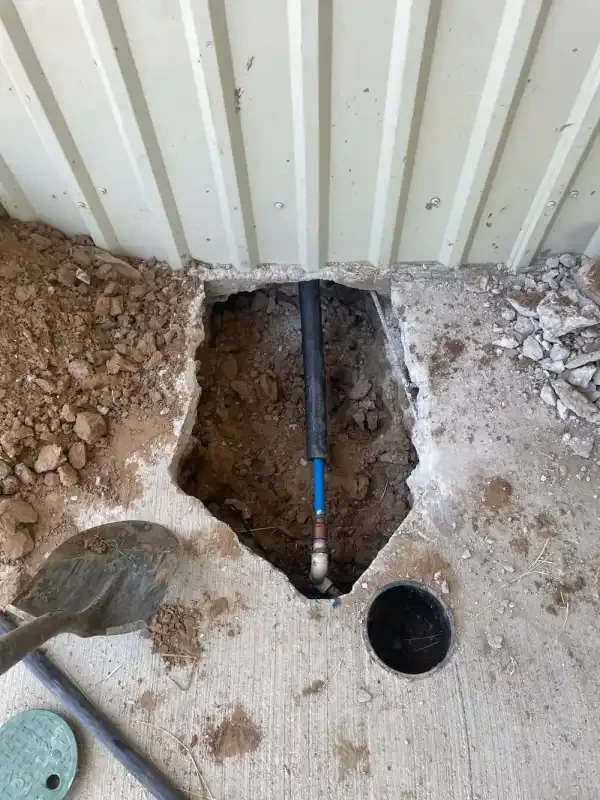
Under the slab
A warm patch on a tile or wood floor usually means a hot line leaking under it. Running water you can hear with every tap shut, or a water heater that seems to run all day, point the same way.
Out in the yard
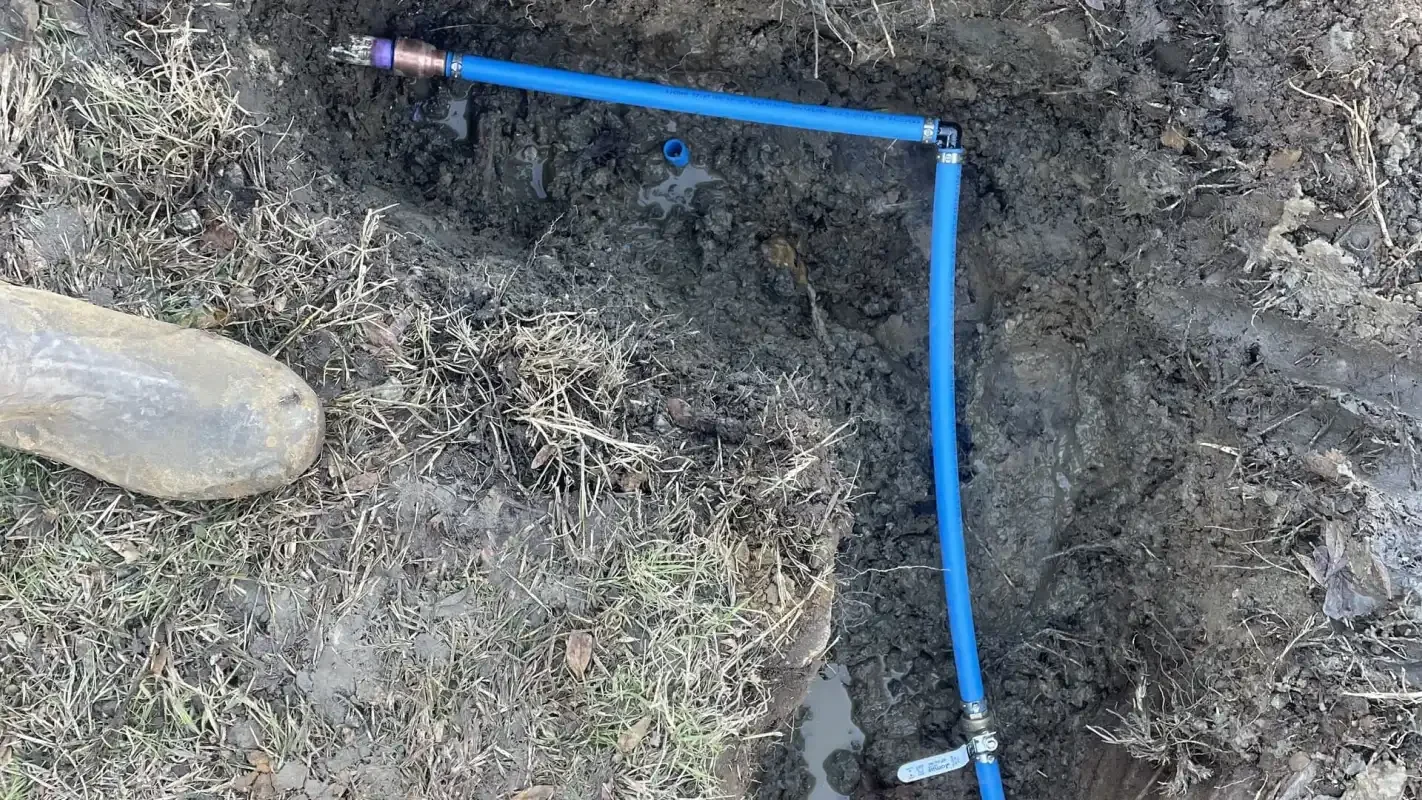
A wet spot that never dries, or a strip of grass that stays green through a dry spell, often sits right over a supply line. On a longer run to the house, the leak can be some distance from where the water surfaces.
Inside a wall
A stain that grows, a baseboard that swells or paint that bubbles near a fixture. These tend to be slow drips at a fitting, and the drywall shows them long before anything runs.
The sprinkler side
Irrigation is common on properties here. A valve that does not close fully, a cracked backflow assembly or a broken line in a zone will turn the meter just as surely as a house leak.
Under a manufactured home
A belly board that sags or stays damp is the usual sign. Getting to the pipe means opening it, so the leak gets placed first and the opening kept as small as the job allows.
Clay that pulls a joint apart by August
North Texas clay swells when it is wet and shrinks when it dries, and the pipe buried in it moves along with it. Photos from earlier jobs are in the gallery.
A slab rides that movement, and so does every supply line under it and beside it. A joint that held through a wet spring can be pulled apart by the end of a dry summer, which is why slab and yard leaks cluster in the hot months. The weak points are joints and transitions: the place where one kind of pipe meets another, or where a line enters the slab, or a coupling left from some earlier repair.
Older yard lines are often a mix of materials joined over the years, and each joint is a place the ground can work loose. When one has failed, the repair may be a single coupling, or it may make more sense to replace the run between two sound points, and you will hear which before the hole is dug any wider.

A meter test you can run yourself
Turn off every tap, the ice maker, the washer and the sprinklers. Find the meter box, lift the lid, and look at the small leak indicator on the dial, usually a triangle or a star. If it creeps while nothing in the house is using water, water is going somewhere. Then close the main valve at the house and look again. A dial that stops points to a leak inside the house; one that keeps turning puts the leak on the line between the meter and the house.
Write down what the dial did and when. That one reading cuts the search in half before anybody arrives. If the dial sits still, the water you are seeing is more likely from a drain or a fixture, and that is a different search.
Access and putting things back are part of the first conversation. Before a slab is cut or a yard is dug, you know where the opening goes, about how big it is, and how it gets closed: concrete patched level, soil backfilled and tamped, drywall left ready for paint. Send what you have found through the contact page, or call Norman with the meter reading in hand.
Other work A+ does in Cross Roads
Frozen Pipe Repair: hose bibbs, attics, yard lines.
Faucet Repair: drips, low flow, loose handles.
Commercial Plumbing: shops, offices, metal buildings.
Tankless Water Heater Installation: gas and electric units.
Everything else in town is on the Cross Roads page, and the leak detection page has the full write up on this job wherever you are.
Before you call about a leak
How can I tell if I have a slab leak?
Look for a warm spot on the floor, the sound of water running with every fixture off, or a water bill that jumps without a reason. The meter test settles most doubts: if the dial moves with the house shut down and stops when the main is closed, the leak is inside.
Will finding the leak mean breaking up my floor?
Only at the spot where the pipe failed, and only once it has been located. The looking is done with valves, gauges and the meter. The hammer comes last. When the slab does have to be opened, the cut is kept small and the concrete is patched level afterward.
My water bill jumped but nothing looks wet. Where do I start?
Start with the toilets, since a running flapper can waste a surprising amount without leaving a drop on the floor. Then do the meter test. If the dial still moves with every fixture quiet, the water is leaving through a pipe you cannot see, and that is the point to call.
Is it better to repair a slab leak or reroute the line?
It depends on the pipe. A single failure on a line that is otherwise sound is usually a repair through the slab. If the pipe is old and has leaked before, running a new line overhead and abandoning the one under the floor can be the better use of the money.
Can a sprinkler system make the meter move?
Yes. A zone valve that will not seat, a cracked backflow assembly or a broken line in the yard all register on the meter. Shutting the irrigation off at its own valve during the meter test tells you whether to look there or at the house.
What happens to my yard after a line leak is fixed?
The hole is backfilled and tamped so it does not sink later, and the soil or sod goes back where it came from. How that will be done is settled before the digging starts, so nobody is surprised by a trench left open or a patch of bare clay.
A leak under the foundation
Fixed our water leak under the foundation. More than fair price and quick to get it fixed. Definitely found a great and honest plumber here.
Ask the plumber
Run the meter test, tell me what the dial did, and I can usually say which part of the property to start on.