
Kitchen Plumbing in Pilot Point.
A kitchen remodel is cabinets and counters right up until somebody wants the sink on the island. From then on it is a plumbing job, and the decisions that matter get made before the cabinets arrive. Norman handles the drains, vents, supply lines and hookups himself.
The smaller kitchen jobs
Dishwasher drain
The drain hose gets an air gap at the sink or a high loop under the counter, whichever your setup calls for. Either one keeps dirty sink water from running back into the clean dishes.
Disposal
A new disposal has to sit at a height the trap can work with. When a dishwasher drains through it, the knockout plug inside the inlet comes out first, or the dishwasher fills and stays full.
Shutoffs under the sink
Under older sinks the angle stops have often not moved since they went in. If one is stiff or weeping when the faucet comes off, it gets replaced then, while everything is apart anyway.
Faucet swaps
A new faucet goes on with new supply lines. Old braided hoses are cheap to replace and expensive when they burst behind a closed cabinet door.
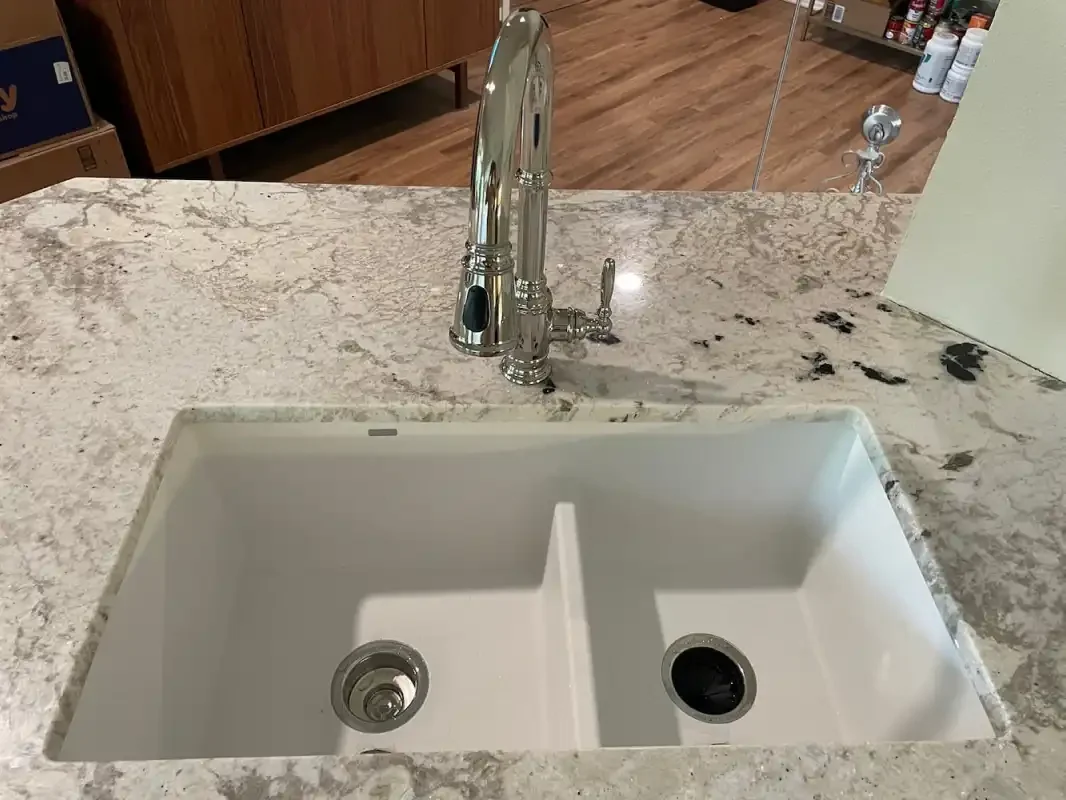
Undermount sinks
The sink is usually set by whoever installs the stone. The plumbing side is making sure the strainer, tailpiece and trap line up underneath, and that nothing is forced to meet.
Hard water
North Texas runs hard water, and it wears faucet cartridges. A drip from the spout or a handle that has turned stiff is often a cartridge, which is a much smaller job than a new faucet.
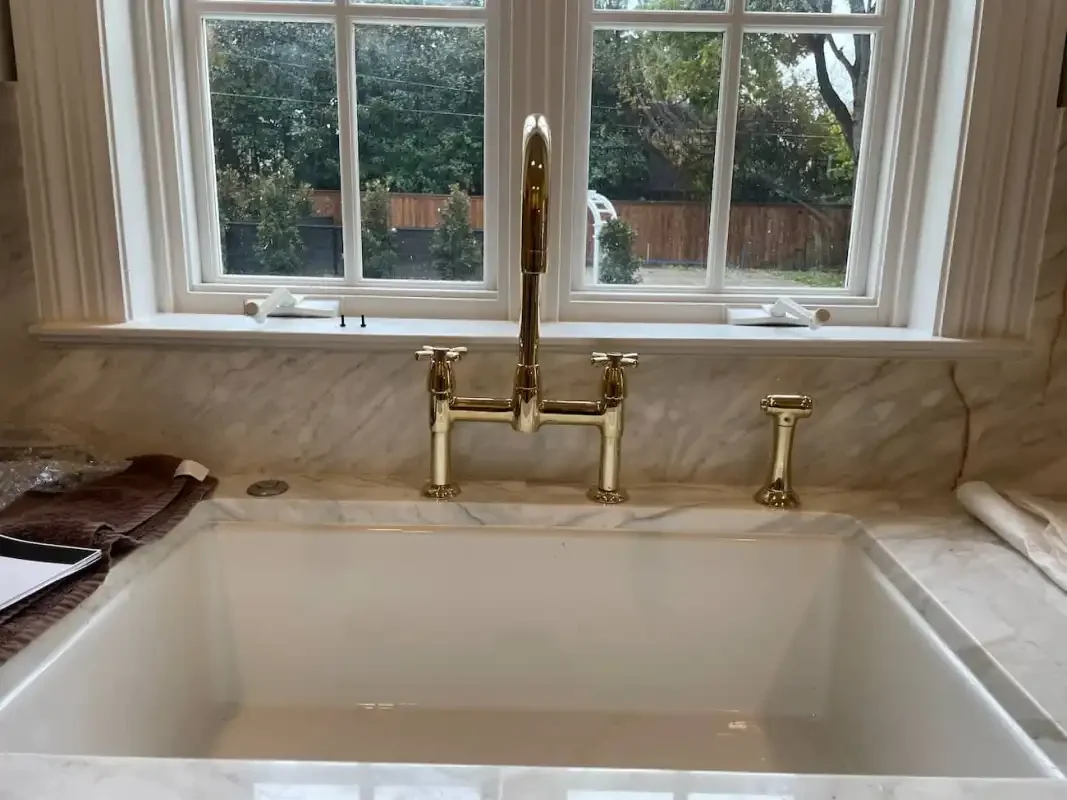
A pot filler goes in before the backsplash
Everything that makes a pot filler work is in the wall. A cold supply line has to come up behind the range to the height where the spout will hang.
That means it has to happen while the wall is open, before drywall is finished and long before any tile goes up. Getting the height right takes a conversation about your tallest pot and the range hood, and the spout needs solid backing in the wall so the arm does not work loose over years of swinging out. Bring the pot you use most to that conversation. Norman also puts a shutoff where it can be reached, usually in the cabinet next to the range or behind an access panel, so the filler can be serviced without pulling tile.
A pot filler with a folding arm puts real load on the wall, which is exactly why the backing matters. Pot fillers run cold water only in most kitchens, which keeps the rough-in simple. Sometimes one can still be added after the wall is finished, working from the cabinet beside the range, but it means more work and some patching. Ask the tile setter to wait until the line has been tested. If the range is moving to gas in the same remodel, that gas line can go in while the wall is open too.

Putting the sink on the island
Moving the sink to an island is the plumbing decision that shapes the rest of a kitchen remodel, and on a slab house it means going through concrete.
The supply side is easy. PEX bends where it is told and can come up through the floor almost anywhere. The drain is the hard part: it has to run downhill under the slab from the island to the existing drain line, so a channel gets cut in the concrete, the pipe is laid at the right slope, and the slab is patched once it passes inspection. Older houses near the square and newer builds on the edge of town do not always have their drains where you would guess, so finding the existing line comes before any cutting.
The sink can go nearly anywhere you like, as long as the drain can follow it.
Venting is the other half. An island has no wall behind it to carry a vent up through the roof, so the vent is planned up front, with a loop under the counter or a mechanical vent where the inspector will accept one. A sink that glugs after the remodel usually means somebody skipped this step. The kitchen plumbing page covers the rest of what a kitchen asks of its drains, and the Pilot Point page has the rest of what A+ handles in town.
Where the plumber fits in a remodel
Kitchen remodels go wrong in the gaps between trades. The cabinet layout gets drawn, the counters get templated, and the plumbing is expected to meet them wherever they landed. A drain in the wrong spot is the kind of mistake that gets found after the stone is installed. It goes better the other way around. Norman walks the plan early, marks where the drain, the vent, the supply lines and the gas have to be, and comes back for the rough-in while the walls and floor are still open.
Commercial kitchens follow the same order on a tighter clock, since a restaurant that cannot open is losing a day of business. That work gets scheduled around closing hours where it can be.
The finish work comes last, once the counters are set: faucet, disposal, dishwasher, pot filler and the fridge line, each one tested before the cabinet doors close. If a contractor is running the job, he works to their schedule and talks to them directly so you are not carrying messages between the two. Send the plan or a photo of it through the contact page, or call (940) 231-5706 and talk it through with the man who would do the work. Finished kitchens and fixtures are in the gallery.
Other work A+ does in Pilot Point
Gas Line Installation: ranges, grills, shop heaters.
Water Service Line: from meter or well.
Bathtub Installation: freestanding, drop-in and walk-in tubs.
Shower Installation: valves, pans, drains, conversions.
Everything else in town is on the Pilot Point page, and the kitchen plumbing page has the full write up on this job wherever you are.
Kitchen questions
Can you move my sink to an island if the house is on a slab?
Yes. The slab is cut along the route, the drain is laid with the right fall to the existing line, and the concrete is patched after inspection. The vent is part of the plan from the start, since an island has nothing behind it to carry one.
Does a pot filler need its own water line?
It needs a cold line brought up the wall behind the range, usually teed off the nearest supply, plus a shutoff you can reach. That is a simple job while the wall is open and an awkward one after the backsplash is finished.
Is an air gap required for my dishwasher?
Some setups use an air gap on the sink deck and some use a high loop under the counter. Which one your kitchen needs depends on the local rules and the layout, and Norman will set it up to pass inspection instead of guessing.
My kitchen faucet drips. Do I need a new one?
Often not. Hard water wears out the cartridge inside, and swapping a cartridge fixes the drip for a fraction of the trouble. If the faucet body is corroded or parts are no longer made for it, a replacement makes more sense, and you will be told which.
The shutoff under my sink will not turn. Should I force it?
No. A seized valve forced with pliers can snap off and leave you running for the main with water everywhere. Leave it, and have it replaced the next time anyone works on that sink, or sooner if it is already weeping.
When should a plumber come into a kitchen remodel?
Before the cabinets are ordered, if possible. That is when moving a sink, adding a pot filler or relocating the dishwasher is easiest, because nothing has been built around the old positions yet. The rough-in follows once demolition is done.
Why people keep the number
The owner Norman is genuine and very timely. We had express service, outstanding results, with zero issues. I highly suggest you keep A+ Plumbing’s number in your phone.
Get Norman on it
Show me the plan before the cabinets are ordered and the sink can go where you actually want it.