
Sewer Line Installation in Aubrey.
Put a shop, a guest house or a manufactured home on a piece of land near Aubrey and the water it uses has to leave somewhere. A new drain line is how it leaves, and where that line runs gets settled before anybody digs.
Sewer or septic decides the route
The first question on a new drain line is where it ends, and around Aubrey that is not always the city sewer.
Some properties tie into a public sewer main and some, especially out on acreage, run to a septic system. Which one yours uses sets where the new line goes, how far it travels and what it connects to at the end. A+ handles the drain line itself. The septic system, its design and its tank, belongs to a septic contractor, and if your project touches one, Norman will say so early so the two jobs line up instead of colliding.
Where the pipe has to end up is the first thing I want to know.
Distance is the other thing that changes the job. A shop at the back of a long lot means a long run, and a long run has to keep its fall the whole way, which is where a new line most often goes wrong. On a longer run, the pipe size and the spacing of cleanouts come into the plan as well. Drains for a house addition usually tie into the existing line instead, which raises the question of what shape the old pipe is in. If the line already serving the house is giving you trouble, that is its own job, and Aubrey’s sewer line repair page covers it.
Drains set in the dirt before any concrete
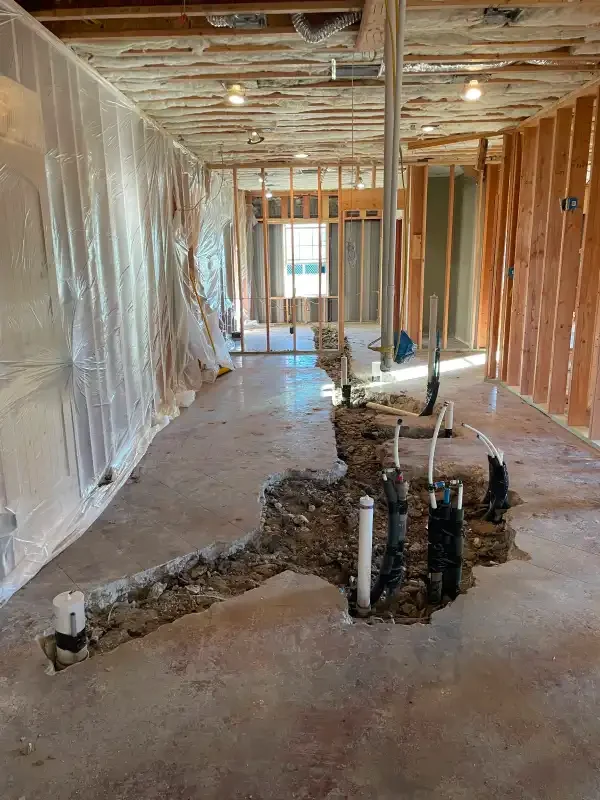
Anything with a slab going down or being cut open, whether a shop floor, an addition or a remodel that moves a bathroom, gets its drains laid out in the ground first.
Each stub has to land in the right spot at the right height, because once concrete goes back over it, moving one means cutting it out again. The layout gets checked against where the sink, the toilet and any floor drain will really go, then the pipe is bedded and tested before the pour.
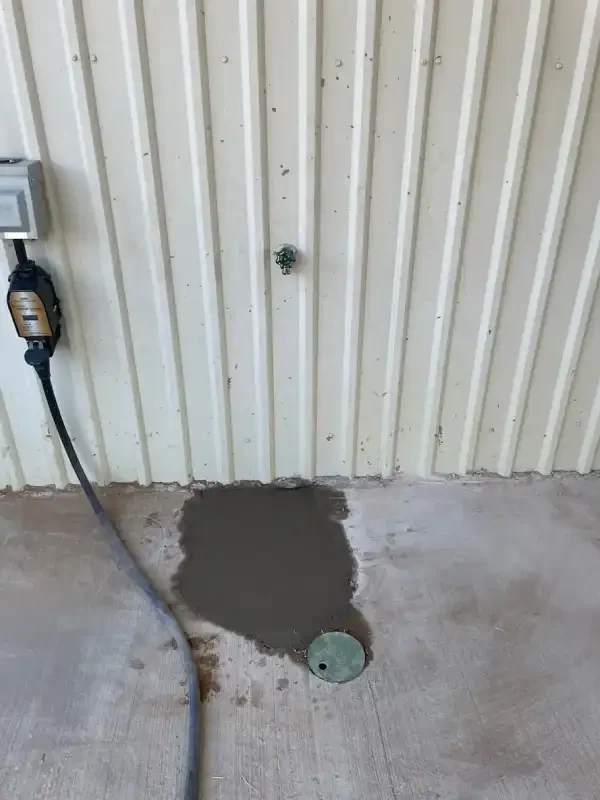
Setting a manufactured home brings its own connection. Those homes are a big part of the housing here, and their plumbing is usually tucked up in a belly board, so the drain outlet under the home has to meet the line coming out of the ground at the right place. Ask the setter where that outlet will be, and Norman can plan the trench to meet it. More on new runs in general is on the sewer line installation service page.
Slope, cleanouts and the lawn afterward
Enough fall, and no more
A drain needs a steady slope to carry waste. With too little, solids settle in the pipe. With too much, the water runs ahead and leaves them stranded. Either one ends in a blockage, so the grade is set and checked along the whole run.
Cleanouts you can reach
A long run gets cleanouts along the way, at the building and where the line changes direction, so a clog years from now can be cleared without digging. Nobody thinks about a cleanout until the day it saves them a trench.
Bedded so it cannot sag
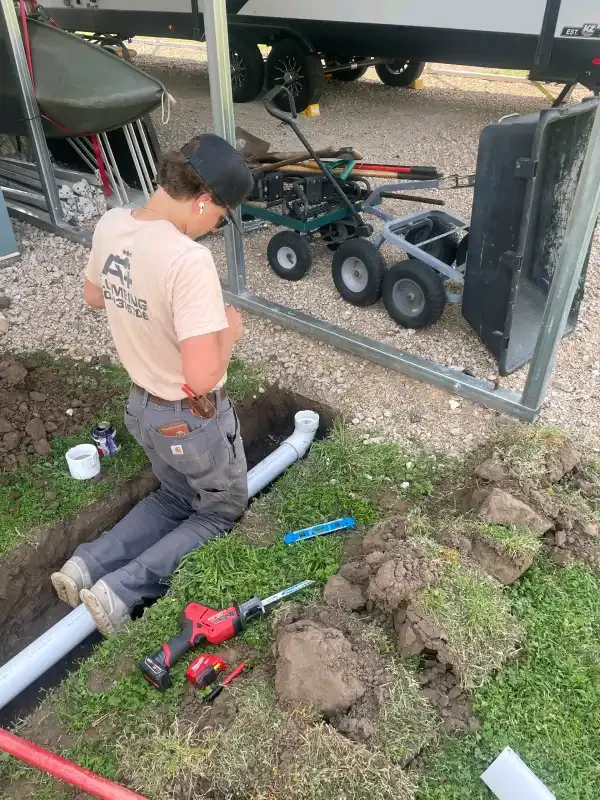
The trench floor is leveled and the pipe is bedded so it stays at grade once the dirt goes back. A belly in a brand new line holds water from the first flush.
Digging through a lawn
On grass, the sod and topsoil come off first and are kept apart from the fill. When the line is in, the trench is filled, settled and leveled, and the topsoil goes back on top where it belongs.
Inspected before it is covered
Where the city requires an inspection, the trench stays open until the line has been seen. Burying pipe an inspector never looked at only means digging it up again.
Water through it first
Water goes through the finished line before it is put to work, and any weak joint shows up while it is still easy to reach. A camera can go down a long run too, so you can see the finished pipe for yourself.
Talk it through before the pour
The easiest moment to get a new drain right is before anything is built. If you are planning a shop, a barn with a bathroom, a guest house or an addition, call while it is still on paper. Norman can tell you where the line can run, whether the fall works over that distance and what needs deciding before the slab crew arrives. Changing your mind about where the bathroom goes is easy at this stage and hard once the floor is finished. A barn sink or a utility tub out there usually needs water coming in too, and where that water also feeds a hose or a stock tank, backflow protection comes into it, which the backflow testing page for Aubrey explains.
A+ is a small shop, so the person you talk the plan over with is the one who lays the pipe. He would rather move a line on paper than in concrete. If the builder already has a plan drawn, bring it, and the drain layout can be marked right on it. Call (940) 231-5706, or send a rough sketch and a few photos of the spot through the contact page. Finished work is in the gallery.
Other work A+ does in Aubrey
Water Heater Repair: pilots, elements, valves, leaks.
Gas Line Repair: leaks found, fixed, pressure tested.
Backflow Testing: the yearly sprinkler test.
Faucet Installation: kitchen, bath, laundry, shop.
Everything else in town is on the Aubrey page, and the sewer line installation page has the full write up on this job wherever you are.
Questions about a new drain line
Do you run sewer lines to shops, barns and guest houses?
Yes. A detached building with a sink, a toilet or a floor drain needs a line back to the sewer or the septic system, sized and sloped for the distance. Plenty of these jobs come from bigger lots and acreage, where the building sits well away from the house.
Will my new building go to the city sewer or a septic system?
It depends on the property, and it is the first thing to find out. Some places around Aubrey connect to a public main and some run to septic. A+ handles the drain line, and the septic system itself is work for a septic contractor.
Can you lay out the drains before a slab is poured?
Yes, and that is the best time to do it. The stubs are set where each fixture will go, at the height the finished floor needs, then bedded and tested while the ground is still open. Moving a drain after the concrete cures means cutting the slab.
How much slope does a new sewer line need?
Enough to keep waste moving at a steady pace, and not so much that the water outruns it. The right fall depends on the pipe size and the code, and it gets set with a level along the full run rather than by eye.
How torn up will my yard be?
A trench has to be dug, so the yard will show it for a while. The sod and topsoil are set aside and go back on top, and the trench is settled and leveled when the line is in. Grass needs some time to knit back over it.
Do you connect manufactured homes to the sewer?
Yes. Once the home is set, the drain outlet underneath is tied to the line rising out of the ground, with the connection matched to how that home is plumbed. Knowing where the setter will place the outlet before the trench is dug saves moving pipe later.
Norman and his helper
Norman and his helper were so good and very kind. They did a couple of extra things for me without hesitation.
Call Norman direct
Send me a sketch of where the building is going and I will tell you where the pipe has to run.