
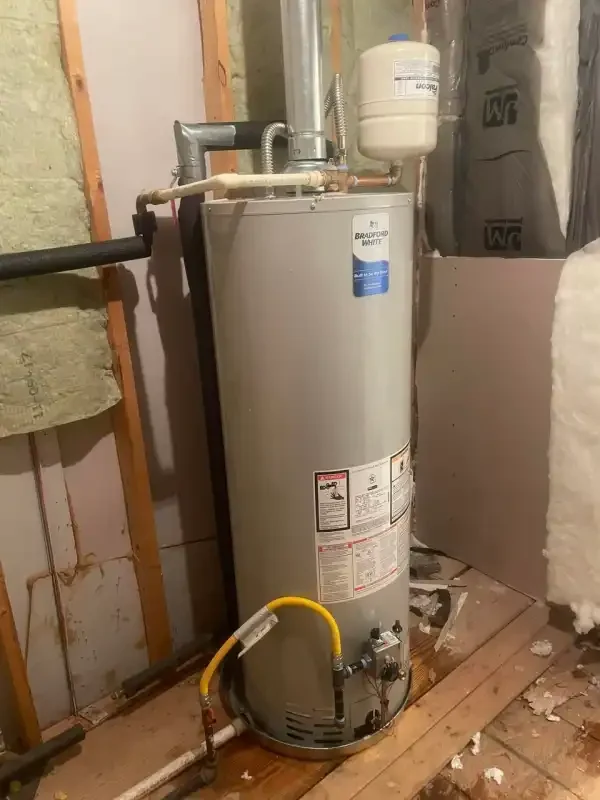
Water Heater Replacement in Denton.
A tank water heater does not get better with age. Once it starts rumbling or leaving a damp ring at the base, Norman pulls it, hauls it off and puts in a new one that fits the closet, the flue and the way your household actually uses hot water.
When the tank is done, it says so
A water heater rarely fails all at once. It gives warnings for months, and most of them are easy to read once you know what you are looking at.
Rust-colored water in the first draw from the hot side is one. If the cold tap runs clear and the hot one comes out tinted, the inside of the tank is corroding, and the lining that protects the steel has given up somewhere. A rumble or a pop while the burner is running is another. That noise is sediment, minerals that settled to the bottom and now sit between the flame and the water, so the tank works harder for every gallon it heats. Most of the area A+ covers runs hard water, and that wears a tank out faster than the label on its side suggests.
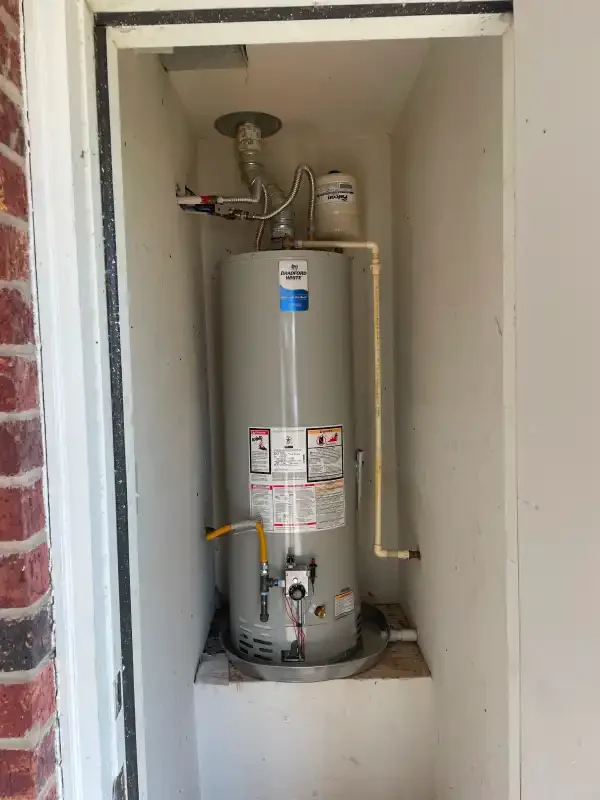
The one that ends the discussion is water at the base. A tank that weeps from a seam or from underneath has rusted through, and there is no repair for that. Plenty of older houses around Denton put the heater in a narrow closet with the flue running up through the ceiling. When a tank like that leaks, the water heads straight for the hall floor, so do not wait on it. Close the cold valve on top of the heater, turn off the gas or the breaker, and call.
A new tank has to fit the old closet
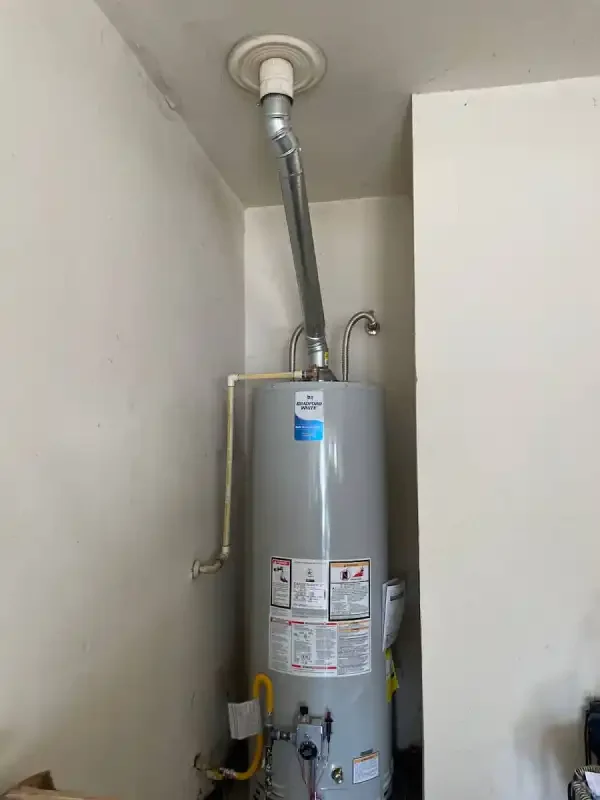
Replacement sounds like the simple version: same spot, same connections. In an older house it rarely works out that way. Plenty of heaters here sit in a hall closet built tight around the original unit, or in a small closet opened from outside through the brick. A new tank can be taller or wider than the one it replaces, because tank designs have changed over the years, so the first measurements Norman takes are the door opening and the height under the ceiling.
Gas units bring the flue into it. The vent has to rise from the top of the new tank and join the existing vent cleanly, with a steady upward slope, because a flue that will not draw pushes exhaust back into the closet. Electric units need the wiring and the breaker checked against the new heater. Staying with the fuel the house already has is usually the plain choice. Switching is possible, but it means a new gas line or a new circuit, and that belongs in the first conversation so nobody is surprised on the day. Tankless is its own subject, covered on the tankless installation page, and the honest version of it includes the downsides. The general version of a tank swap is on the water heater replacement page.
Sizing for the busiest morning in the house
The usual mistake on a replacement is buying the same size tank again without asking whether the old one was ever right.
A family that has grown since the last heater went in, or a remodel that added a big soaking tub through some bathroom plumbing work, can run a tank cold before the last shower. Too small a heater is a nuisance that lasts as long as the tank does, so the questions come first: how many people live there, how many bathrooms get used at once, and whether the washer and dishwasher run during the morning rush. The tank gets sized to those answers, and sometimes the answer is the same size you already had. A bigger tank also costs a little more to keep hot, which is why nobody should be sold more heater than the house needs.
Tell me who showers when, and I will tell you what size tank you need.
Send the details through the contact page if you manage a few of these, or call (940) 231-5706 and talk it over with the plumber who will do the install.
What a replacement includes now
An expansion tank
Many houses have a pressure regulator or a check valve on the main, which leaves expanding hot water with nowhere to go. A small tank on the cold line above the heater soaks up that pressure so the heater and the faucets do not have to.
A pan where a leak would do damage
In a hall closet or anywhere above a finished floor, a drain pan under the tank catches a future leak before it spreads. In a garage on bare concrete it matters less, and you will be told which case yours is.
A relief line that goes somewhere
The temperature and pressure relief valve needs a discharge pipe run to a safe, visible spot. Older installs often have it cut short, capped off or aimed at the drywall, and that gets corrected.
Gas shutoff and a sediment trap
A gas heater gets its own valve within reach and a short trap ahead of the control, so grit carried in the line drops out before it can foul the gas valve.
The old one leaves with the truck
The rusted tank is drained, carried out and hauled away. You are not left with a heavy steel cylinder on the driveway waiting for bulk pickup.
Filled, lit and looked over
The tank is filled before it is fired, every joint gets a look for drips, the flue is tested for draw, and the closet is swept before anyone leaves. Photos of finished installs from other jobs are in the gallery.
Other work A+ does in Denton
Sewer Line Replacement: cast iron and clay, replaced.
Pipe Replacement: galvanized and poly, repiped.
Bathroom Plumbing: remodels, vanities, shutoffs.
Toilet Installation: measured, set, sealed, tested.
Everything else in town is on the Denton page, and the water heater replacement page has the full write up on this job wherever you are.
Questions about a new water heater
How do I know whether to repair my water heater or replace it?
If the tank itself is leaking, it gets replaced, because rusted steel cannot be patched. A bad thermocouple, gas valve or electric element on a tank that is otherwise sound is usually a repair. Norman will look at the heater and tell you which one you have before anything is quoted.
Do you replace both gas and electric water heaters?
Yes, both. Most houses stay with the fuel they already have, since that keeps the job inside the closet. Going from electric to gas means running a gas line, and going the other way means a new circuit, so either switch is talked through and quoted before anything is ordered.
Can a tankless heater go where my old tank was?
Often, though it is a bigger job than a straight swap. A tankless unit usually wants a larger gas line and a different vent than the tank had. Ask on the call and you will hear whether your house is a good candidate for one or a poor one, and why.
Does hard water really shorten a tank’s life?
It does. Minerals settle at the bottom and build a layer between the burner and the water, which makes the heater run longer and louder and strains the steel. Flushing the tank on a schedule slows that down, and Norman can show you where the drain valve is and how to do it yourself.
What should I clear out before the plumber arrives?
Clear a path from the door to the heater and empty the closet around it, since the old tank has to come out the same way the new one goes in. Move anything stored on top of it or behind it. Keeping pets out of that room for the visit helps as well.
Can you replace a water heater the same day it fails?
Often, since a replacement is ordinary work, and emergency calls run nights and weekends. If the tank is leaking, shut off its water and its gas or power first. Then call (940) 231-5706, say where the heater sits, and you will get a realistic time to expect Norman.
Out in the cold, on short notice
Norman showed up on very short notice, did a great job and was very pleasant despite the cold. I highly recommend A+ Plumbing and Mr Alambar.
Start with a phone call
If the tank is weeping at the bottom, close the water off on top and call me before it reaches the floor.